
Customized Career Exploration Report
Client Name:
Student Sample
Date of Test:
2013-10-27 20:37:04
Phone No.:
Home Phone:
E-mail:
studenttest5@highlandsco.com
Report Type:
Student Career
Page-1

Highlands Career Exploration Supplement
Prepared for
Student Sample
Take Charge of Your Career
Congratulations! You’ve taken the Highlands Ability Battery (HAB), an important step in discovering
your natural talents. Now you’re ready to make informed decisions as you begin to manage your own
career.
Your Highlands Career Exploration Supplement (HCES) is a powerful tool that will take your career
search to the next level. Turn what you know about your abilities into action and take charge of your
career.
- Know what you do best.
Your HCES will confirm your natural gifts and will guide you to position yourself where you can use them.
- Find the right fit. Careers to explore are based on your combinations of abilities and personal style,
rather than just one ability at a time, which can give you a clearer picture of how you may be suited
to different career paths.
- Assess realistic options. Let’s be real, you may be suited to some careers better than others. Follow
the activities in your HCES and links to the O*NET, the US Dept. of Labor’s Occupational Information
Network, to assess the amount of time and effort you may need to reach your goals.
- Work together with a Career Advisor. Your Highlands Affiliate will help you navigate your journey to
create your personal vision to success and satisfaction.
HCES Report Overview
This report is your launch pad for career exploration, here is what you will find:
ONLINE EXPLORATION FOR MORE - access the Highlands Career Exploration report ONLINE for more
in-depth descriptions of each ability and how they impact work roles. View an expanded list of ability
patterns and careers to explore with hotlinks to the O*NET for information on careers.
I. Your Ability Profile
Your HAB results were determined by using timed worksamples and are reported as percentile ranking
scores. Worksamples are performance-based rather than self-report assessments. Percentile ranking
scores are your score relative to tens of thousands of others in the Highlands database of test takers.
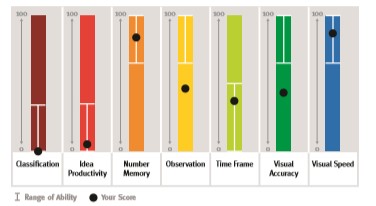
Your results from the HAB are displayed below. When
accessing this HCES online, you can click on any of the abilities below to find examples of how that
ability can be used in a variety of work roles/career fields. Doing this can help you better understand
an ability; it is not meant to suggest a specific job or occupation.
This report emphasizes how combinations of abilities work together. The combinations are unlimited.
Once you learn the basic combinations or building blocks you can combine them yourself to create
additional careers not mentioned in this report! You’ll be able to integrate these combinations with
your interests, values, and goals any time you want to expand or redesign your career path.

Your Highlands Ability Profile
Click On Each Ability For Fuller Explanations
Personal Style
Driving Abilities
Specialized Abilities
Typing Speed
Vocabulary
Low
Med
High
Score
II. Your Personal Style
Detailed Researcher
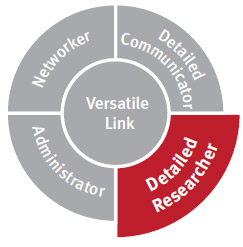
As a Specialist, you gravitate toward activities that utilize your own
direction and knowledge, and your Introversion allows you to get energy
from working alone. Your natural inclination is to focus on and acquire
more and more information about a specific area of interest, and it’s
relatively easy for you to become more knowledgeable on a particular
topic or issue than anyone else in the group.
You are likely to find a good fit with work that relies on your ability
to complete tasks independently and deepen your understanding of
a specialized topic. Campus activities that might draw your attention
are going to be behind the scenes preparing materials for others’ use.
Debate, scientific, or political researcher, team statistician, or researcher for a newspaper or a blogger are
a few roles you might enjoy.
Time Frame Orientation
 Intermediate:
 Combined with an intermediate completion date (1-5 years), work that requires relationship
building or patience with a 1-5 year process before achieving an ultimate result may feel more motivating
and meaningful.
You are drawn to activities that take time to achieve. You may feel that immediate, short-term tasks may
hold little meaning to you unless you can see the connection to something you care about in the future.
You are naturally able to hold 1-5 year goals in your mind, and you have the patience to work toward and
see your activities as helping you achieve that goal. Examples are planning to finish a college degree four
years in the future, getting physically fit to try out for a varsity position in two years, or saving money for a
car purchase three years from now. Work or educational responsibilities that require patience with a 1-5
year process or building more meaningful relationships will probably feel like a good fit.
III. Your Reasoning Abilities
Problem Solving (Convergent Reasoning)
Pragmatic
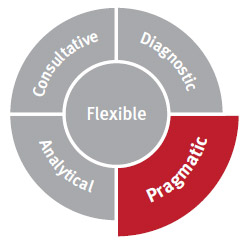
Your low Classification and low Concept Organization indicate you
reach conclusions best by relying on your own knowledge and previous
experience. When you have had a lot of experience with a particular type
of situation or problem, you can become the quickest problem-solver of
them all. If you don’t have your own experience with an issue, you will
rely heavily on, and seek out, those that have.
You perform well and feel most at home when you are given the
opportunity to learn the ropes and gain direct experience. As an
experiential problem-solver you will feel most comfortable in situations
where you have some experience. Gaining experience in positive, controlled environments, such as job
shadowing, informational interviewing, and practical internships will be vital to your success.
Idea Productivity (Divergent Reasoning)
Your low Idea Productivity results in a naturally focused approach to thinking and working. You have the
ability to stay focused on a goal or project until its completion, without the distraction of competing ideas
in your mind. You are likely to excel in careers that draw on your strength to stay on task and possibly
keep others focused on a single goal, in order to avoid distraction until a project is completed or a goal
is attained. Because of your natural tendency to stay focused, you will prefer to work on one project at
a time and you may have difficulty or feel stressed when multiple tasks need simultaneous attention for
prolonged periods of time.
This means you would feel most comfortable in a career that values your ability to focus, helping others to
focus, and the completion of one task before moving on to another.
Spatial Reasoning
Between Spatial Theorizing and Spatial Executing
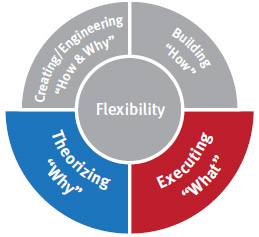
Your mid-range SRT and low SRV indicate you function most comfortably
in the world of theories, physical laws, and math. You have a moderate
innate ability to understand how we organize and control physical
and mechanical systems, at an intangible/theoretical level such as
astronomy, physics and pure mathematics. It is a focus on the “why” of
things rather than on the “how”.
You are more likely to be drawn to majors that examine the theory behind ideas than majors that create tangible objects. Possible majors include those in the traditional “liberal arts” such as sociology, anthropology, psychology, and history. You may be drawn to professional fields that require post-graduate training or education.
IV. Your Specialized Abilities
Some Musical Influences. Music abilities include Tonal Memory, Rhythm Memory and Pitch
Discrimination. Your combination of scores indicates you have some natural musical ability. You
will want to have some connection to these abilities such as learning to play an instrument on your own,
taking part in some musical expression like a choir, playing music in the background while you
study or work, or incorporating music into events or presentations. Depending on which one or two
of these abilities is strongest, you may be more sensitive to particular elements of sound and may
find alternative outlets.
Moderately Strong Visual Proficiency. Visual proficiency (or dexterity) includes both Visual
Speed and Visual Accuracy. Your combination of scores indicates
moderately strong visual abilities
related to paper work tasks. Your natural inclination is to emphasize speed over accuracy when
proofing, working with numbers, coding and tracking inventory.
Robust Language Learning. Your ability to learn another language is primarily influenced by your
Verbal Memory (learning the vocabulary and grammar from books) and your Tonal Memory (learning
from hearing). Your Rhythm Memory and Pitch Discrimination can also influence your ability to
replicate how the language sounds. Your combination of scores indicates you have a
strong natural
ability to learn a foreign language. The combination of using books and hearing the language being
spoken will facilitate your learning.
Somewhat Influential Creative Orientation. The HAB does not have a direct measure of
creativity or artistic ability. The combination of Idea Productivity (thinking of many ways of
doing something), Design Memory (remembering the overall pattern of something), and Pitch
Discrimination (a sensitivity to small nuances of change and the effects of such a change) indicate a
creative or artistic orientation. In addition to visual art, these abilities allow you to be creative with
any kind of task you do. Your combination of scores indicates you have a moderate natural artistic/
creative orientation and you will want to choose work roles and other activities that allow you to
express your creative side.
V. How You Learn

Learning By Reading
Verbal Memory
- Reading is a very important tool for learning
- Utilize text books, magazines, newspapers, internet sites, texts, and social media for learning
- Encourage others to communicate with you in writing
- Put your thoughts, questions and requests in writing
- Work constantly to expand your vocabulary
Learning By Listening
Tonal Memory
- Listening/hearing is a primary learning tool for you
- Relative fluency in a foreign language is likely manageable
- Speak with others face-to-face while allowing for differences in learning styles
- Read important documents and communications aloud
- Listen to audio books, lectures, podcasts, and other auditory sources of
information
Image Learning
Design Memory
- Incorporating graphic elements into the information you study is a strong learning tool
- You may work comfortably with visual materials such as plans, maps, designs
- Use visual presentation software, graphs, maps, and charts in communicating with others
- Use show-and-tell when introducing a new topic or project
- Use graphics to communicate with others while allowing for other learning styles
Learning Numbers
Number Memory
- Relating information to numbers is a strong learning tool for you
- Use this learning tool to arrange schedules and time-tables for projects
- Investigate majors and careers that require instant access to facts and data
- Remember that others may be slower at working with numbers
- Take time to reduce what you learn to lists
Kinesthetic Learning
Rhythm Memory
- Reproducing physical movements is relatively easy for you
- Practice activities requiring skill in performance
- Will feel a need for moderate physical activity
- Present new ideas and projects through demonstration
- Relax by participating in sports, dance, and music
VI. Vocabulary
Your general vocabulary provides you with the foundation for the breadth and depth with which you
learn and communicate. Vocabulary is a personal tool developed by each individual over time, rather
than a natural ability, but the range of your vocabulary will affect how effectively you can use some
of your abilities. The Highlands Ability Battery tests vocabulary in isolation, which means there are
no context clues in a paragraph to help you know what a word means, only a group of synonyms from
which to choose. Many universities/colleges require an adequate general vocabulary for entry, and yours will be measured further by entrance exams and potentially later for entry to graduate school.
Regardless of your current vocabulary level, knowing how to develop your vocabulary can help you.
Many careers require a specific or technical vocabulary, so discovering how you best learn new words
and ideas will support you in any career you choose. Also, over time, focusing on the development of
a specialized or technical vocabulary may divert developing and/or practicing your general vocabulary
which may decline with disuse. If you ever decide to increase your vocabulary, use your most efficient
learning channels (Design Memory, Verbal Memory, Tonal Memory, Rhythm Memory, and Number
Memory) to assist you with building this skill.
Your General Vocabulary score is in the high range. This indicates a broad general knowledge that
affects your outlook in any work situation. You can think of Vocabulary as measuring both the
number and precision of categories that you have for taking in, processing, and communicating your
experiences. As a result, all of us are usually most at home with others who are at about the same
Vocabulary level that we are. Although you can certainly communicate with a wide range of other
people, you may find that it would be stressful for you to spend most of your day with others who are
markedly lower in Vocabulary than you are. Your score is typical of high.level executives, people in
literary and academic fields, diplomats, negotiators, and those at the top of many professions. You can
think of your vocabulary as providing the driving force behind your career. This means that you should
be able to rise to very high levels in any organization.
VII. Use Your Abilities to Explore or Change Your Career
You now have a wealth of customized information at your fingertips. Depending on your objectives, we offer three avenues to help you direct your efforts:
Interactive HAB –O*NET Career Exploration Tool
The Highlands Company has partnered with a team of O*NET consultants from HumRRO, an independent, non-profit research and consulting firm with expertise in vocational assessment and career exploration, to develop the Highlands Ability Battery (HAB) Person-to-Occupation Fit matching tool.
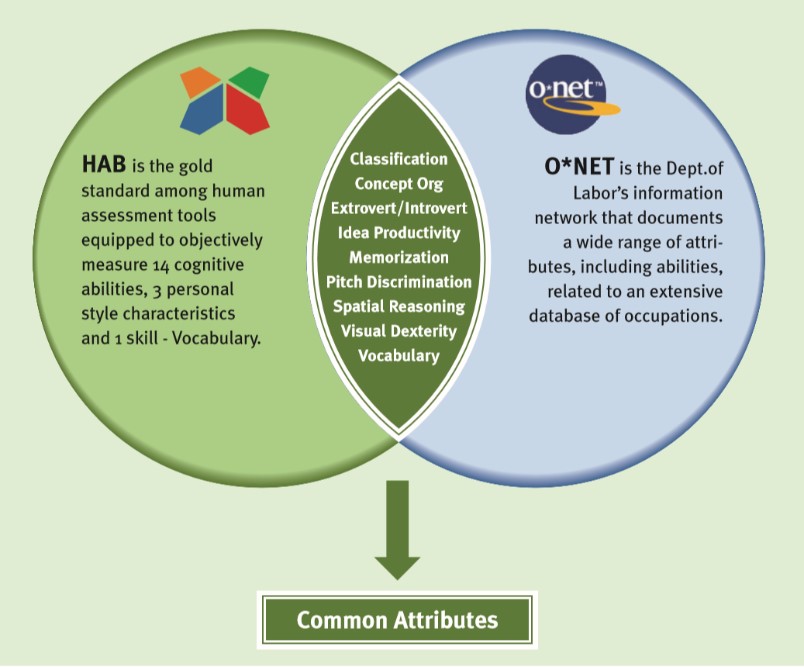

The Ability Battery Person-to-Occupation Fit programming uses the set of Common Attributes to generate a list of 50 O*NET occupations that most closely align with your unique HAB profile.
The Interactive HAB –O*NET Career Exploration Tool will sort your list of 50 occupations by Job Family, Career Cluster, Interest and Rank Order to enhance your career exploration.


The HAB-O*NET Career Exploration Tool shows your top 50 occupation matches organized by Job Family or groups of occupations based upon work performed, skills, education, training and credentials, for ease of finding or eliminating your options.
Click on the name of each occupation for data including a brief description, anticipated future growth, how your abilities relate to O*NET attributes and to link to Occupational Information.
Passion/Interest Driven
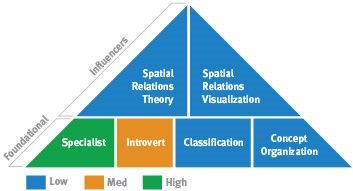

Abilities Constituting This Pattern
This pattern is the combination of a Detailed Researcher (Introverted Specialist) with a Pragmatic Problem Solving style (lower Classification and Concept Organization) and a deeper connection with the practical world (lower Spatial Relations Theory and Visualization). People with this pattern naturally apply their previous experience to new situations. Finding an area of focus or a specific niche will be based on your direct experiences. The sooner you begin your exploration, the more situations you will experience and the more likely you will find work roles that will fulfill your deep interest or passion. Keep in mind that learning what you don’t like is just as important as finding what you do.
Take some time to think about what your interests have been in your life. Do you have a passion, or something you love thinking about or doing? Are any of these interests or passions something you could turn into a job or a business? Your Specialist orientation will drive you to become an expert or authority in your field of choice and your natural drive to succeed will lead you to develop the skills required to competently do any job. In this pattern, your interest or passion becomes your driving ability, and provides the focus and energy to make your career a fulfilling and financially rewarding experience.Your specialized abilities will help you think about where you best fit in an organization or within your own business. Do you have medium to high visual design abilities such as Design Memory or Observation? If so, begin your search in industries with high design needs. Do you have medium to high musical abilities in Tonal Memory, Rhythm Memory, or Pitch Discrimination? These specialized abilities might create an interest or passion for working in a music oriented industry.
100

0

•

Concept Organization
100
0

•
Spatial Relations Theory
100
0

•
Spatial Relations Visualization

Your Scores (black dots) Relative To Required Ability Range
Your pragmatic, practical driving abilities mean that you are a natural at capitalizing on your experiences and that you have the necessary patience to develop the skills required to become an expert or authority. You will want to seek out opportunities that help you gain experience such as internships or apprenticeships. You work well in the intangible world and are comfortable dealing with emotions, ideas, theories, feelings and relationships. Having this ability will help you understand yourself and others in your industry and to create and sustain a network of clients or partners. There is a good chance you will eventually be drawn to open your own business, or become an independent consultant, because you probably have an interest in being autonomous. You will do well to develop a depth of experience before setting out, so that your expertise will be easily validated. Direction for this pattern is related to your unique interests, before you review the suggested careers below, click this link,
http://www.mynextmove.org/explore/ip, to explore your interests on ONET's free, 10-minute Interest Profiler.
See next page for CAREERS TO EXPLORE.
Careers to Explore for Passion/Interest Driven
Organized by Job Families which are groups of occupations based upon work performed, skills,
education, training and credentials.
Arts, Design, Entertainment, Sports, Media
Athlete & Sports Competitor
Audio & Video Equipment Tech.
Business & Talent Manager
Dancers
Fashion Designer
Film & Video Editor
Poet, Lyricist, Creative Writer
Business and Financial Operations
Compensation Benefits Analyst
Insurance Claims Examiners
Licensing Examiners, Inspectors
Logisticians
Online Services Manager
Purchasing Agents, Farm Products
Tax Preparers
Community and Social Service
Health Educator |
Rehabilitation Counselor
Computer and Mathematical
Telecommunications Engineering Spec
Education, Training, and Library
Adult Education Teacher
Archivist
Audio Visual Multimedia Spec.
Criminal Justice Teachers
Food Preparation and Serving Related
Culinary
Healthcare Practitioners and Technical
Athletic Trainer
Midwives
Music Therapist
Healthcare Support
Vet Assistant /Animal Caretaker
Life, Physical, and Social Science
Food Science Technicians
Management
Administrative Services Managers
Logistics Managers
Storage, Distribution Managers |
Supply Chain Managers
Transportation Managers
Office and Administrative SupportAccount Service Managers
Executive Administrative Assistants
Human Resources Assistants
Legal Secretaries
Personal Care and Service
Animal Trainer
Fitness Trainer
Hairdresser, Cosmetologist
Protective Service
Fish and Game Wardens
Transportation and Material Moving
Airfield Operations Specialists
Flight Attendant |
Problem Solving - Practical Diagnostic
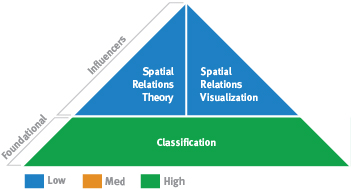
Abilities Constituting This Pattern
This pattern utilizes Diagnostic Problem Solving (Classification) with intangible, practical spatial abilities (Spatial Relations Theory and Visualization). The first ability to take into account is your strong Classification. With strong Classification you are able to solve problems quickly and well; communicating your ideas to other people may present more of a problem. People with this particular combination of abilities often enjoy functioning in a problem solving, or troubleshooting role. They are able to deal with problems quickly, and in fact, thrive on having different types of problems to work on. People with this pattern often ‘see’ the answer much more quickly than others, and can feel impatient at times unless they consciously make allowances for other people's problem solving styles.
100
0
•
Spatial Relations Theory
100
0

•
Spatial Relations Visualization
Your Scores (black dots) Relative To Required Ability Range
Additionally, your scores on the two spatial abilities reinforce each other. You are not going to relate well to mathematics or physical, three-¬dimensional space and objects. You are much more comfortable dealing in the intangible world of people, relationships, and ideas.
This combination of driving abilities is seen quite often in people who operate in fast paced, high-pressure environments that require on the spot decisions and a sense of certainty about them. Politics, fundraising, and troubleshooting are all career fields that use this pattern of abilities.
See next page for CAREERS TO EXPLORE.
Careers to Explore for Problem Solving - Practical Diagnostic
Organized by Job Families which are groups of occupations based upon work performed, skills,
education, training and credentials.
Specializing - Logical Analysis
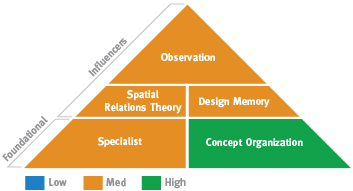
Abilities Constituting This Pattern
This pattern combines a Specialist orientation and Analytical Problem Solving (Concept Organization), with relatively strong Visual abilities (Design Memory, Observation) and an understanding of how interrelated pieces fit together (Spatial Relations Theory). It is the foundation for complex problem solving in higher mathematics and systems or program design. People with this pattern are able to understand and conceptualize the overall design of a project, application, or system, whether concrete or abstract. They are able to organize ideas into a logical sequence leading to a specific goal. Imagining several steps in advance and mentally manipulating outcomes might make strategy games such as Othello or chess enjoyable. This set of abilities has applications in any field in which a number of factors must be taken into account to develop a logical plan. For instance, market research firms try to provide a competitive advantage to their clients by predicting what consumers will respond to and why. You understand products, services and consumers and can project what factors will make a difference.
Your Design Memory enables you to see patterns that can be useful in any planning field. Combined with Concept Organization, you can consider all the relevant elements and put them together to create a logical design. Depending on your Spatial Relations Visualization ability, you may or may not actually transform a design into a tangible product.
100
0

•
Concept Organization
100
0
•
Spatial Relations Theory
Your Scores (black dots) Relative To Required Ability Range
Your ability pattern is critical in computer design, computer engineering, and system design fields. Computer design or engineering requires the analyst to think and anticipate the cause and effect of every step in the design. You need to anticipate the normal usage of the customer and make programming steps to address possible options. Every business and industry in the world is dependent on good systems and these systems are written, designed, and maintained by people who have this ability pattern.
This ability pattern is also applicable in corporate systems like organizational development, where the inter-relationship dynamics of the staff and management are clearly understood. Your Specialist orientation will drive you to develop an expertise in whatever industry you choose.
See next page for CAREERS TO EXPLORE.
Careers to Explore for Specializing - Logical Analysis
Organized by Job Families which are groups of occupations based upon work performed, skills,
education, training and credentials.
Architecture and Engineering
Aerospace Engineers
Agricultural Engineers
Biochemical Engineer
Computer Hardware Engineer
Electromechanical Engineer
Environmental Engineering Tech
Geodetic Surveyors
Nuclear Engineers
Robotics Engineer
Solar Energy Systems Engineer
Business and Financial Operations
Compensation, Job Analysis Spec.
Financial Quantitative Analyst
Market Research Analyst
Computer and MathematicalActuaries
Applications Software Developers
Biostatisticians
Computer & Information Research
Computer Network Architect
Computer Programmer
Computer Systems Analyst
Computer Systems Engineer |
Data Analytics Specialist
Database Administrators
Geospatial Information Scientists
Geospatial Information Specialist
Information Technology Engineers
Mathematician
Nurse Clinical Informatics Specialist
Search Marketing Strategist
Software Developers, Applications
Statistician
Video Game Design
Web Developer
Education, Training, and Library
Instructional Design Specialist
Healthcare Practitioners and Technical
Clinical Nurse Specialists
Dietitians, Nutritionists
Genetic Counselors
Nurse Anesthetists
Nurse Midwives
Obstetricians
Pharmacists
Physical Therapists |
Radiologists
Urologists
Life, Physical, and Social Science
Animal Scientists
Astronomer
Bioinformatics Scientists
Chemists
Environmental Scientists
Food Scientists, Technologists
Geneticists
Geographers
Industrial-Organizational Psychologist
Meteorologist, Space Scientists
Physicist
Remote Sensing Scientists
Zoologists, Wildlife Biologists
Management
Treasurers and Controllers
Office and Administrative Support
Bioinformatics Technicians
Protective Service
Intelligence Analysts |
Technical - Hands-on
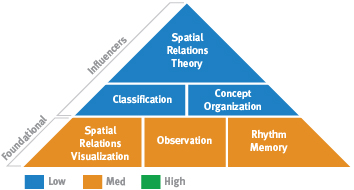
Abilities Constituting This Pattern
This pattern combines a Pragmatic Problem Solving style (lower Classification and Concept Organization) with stronger physical and hands-on abilities (Rhythm Memory, Spatial Relations Visualization) and the capacity to notice visual details (Observation). If Verbal Memory is relatively low, traditional academic settings are likely challenging and take extra effort to do well in. Instead, capitalizing on more experiential or pragmatic abilities is key. If you choose to pursue a career path that does not require advanced formal education, success will likely result from apprenticeships or technical training. If you choose to pursue a career path where more formal education is required, choose an institution where experiential and directed learning is promoted. Experiential learning is the key to your advancement in any educational setting or industry.
As you think about your past experiences, you may notice that you are naturally drawn to tasks which are hands-on and tangible, rather than idea-oriented or abstract. This is your Spatial Relations Visualization ability at work. In addition, Rhythm Memory and Observation make you a natural in work roles requiring physical movement and making adjustments based on what you see. As a person whose abilities line up with the Technical- Hands-on pattern, you can benefit from relying on your innate ability to see and manipulate physical objects. You will be more comfortable thinking about how work will be completed, and what you will need to complete it, rather than focusing on why it needs to be done.
100
0
•
Concept Organization
100
0
•
Spatial Relations Theory
100
0
•
Spatial Relations Visualization
Your Scores (black dots) Relative To Required Ability Range
People with the combination of abilities typically work best when they follow a set of guidelines and have structure in their work. Having to make things up as they go, or facing new or complex tasks to analyze and complete on a regular basis can feel stressful. The key to success for those with this pattern is learning new tasks and responsibilities through on-the-job training and hands-on experience rather than reading a manual or listening to a lecture.
If you are a Generalist with at least mid-range Extroversion, you are well-suited to work on a team in your chosen field, and may make an excellent team leader. If you are a Specialist with mid-to-strong Introversion, you will be more concerned with your individual work and will want to contribute your abilities as an expert.
See next page for CAREERS TO EXPLORE.
Careers to Explore for Technical - Hands-on
Organized by Job Families which are groups of occupations based upon work performed, skills,
education, training and credentials.
Specializing - Connecting/Helping People
Abilities Constituting This Pattern
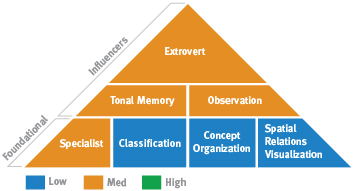
This pattern combines the Detailed Communicator Personal Style (Extroverted Specialist) with Pragmatic Problem Solving (lower Classification and Concept Organization), a comfort with working with intangibles (lower Spatial Relations Visualization) and attentiveness to what is seen and heard (Observation, Tonal Memory). Naturally driven to understand specific areas of interest in great detail, they are patient and less likely to jump to conclusions when faced with new situations. In addition, people with this pattern have a natural comfort working in the intangible world of ideas, relationships and thoughts.
Specialists are most comfortable when they develop a specific area of expertise and deliver services from the perspective of an expert or specialist in the field. An Occupational Therapist, for instance, works in a very specific field, but may work with many different types of patients. Observation enables people with this pattern to notice changes in people’s faces, expressions, and moods, and Tonal Memory indicates an ability to listen and focus on people as they speak. Being conscious of your preference for Introversion or Extroversion will help you evaluate careers where interaction with people is almost constant or careers with a combination of interaction and solitary time. These interactive careers would be more taxing for you if you are more in the mid-range on the Introvert/Extrovert scale. Seeking a career with a combination of interaction and solitary time might be more satisfying for you.
100
0
•
Concept Organization
100
0
•
Spatial Relations Visualization
Your Scores (black dots) Relative To Required Ability Range
As a Pragmatic Problem Solver you are able to draw on your own experiences as well as those of others to build a powerful database of information, solutions, and positive outcomes. Mastering a set of skills first will provide you with experiences from which you will select your solutions. Once you develop an area of competence and experience, you will be capable of moving to influential positions in almost any industry. As long as you stay in your chosen field and learn from your experiences, you can become the quickest problem solver in the organization, because you are able to cut through the distractions of too much information and get right to the point.
You benefit from getting to know people and enjoy building on those relationships. You work well in the intangible world and are comfortable dealing with emotions, ideas, theories, feelings and relationships. This powerful pattern makes you well-equipped to concentrate and focus on the problems that are presented to you. You have an understanding of the people involved, and will patiently work towards the best outcome for all. Direction for this pattern is related to your unique interests, before you review the suggested careers below, click this link,
http://www.mynextmove.org/explore/ip, to explore your interests on ONET's free, 10-minute Interest Profiler.
See next page for CAREERS TO EXPLORE.
Careers to Explore for Specializing - Connecting/Helping People
Organized by Job Families which are groups of occupations based upon work performed, skills,
education, training and credentials.
VIII. Next Steps
The Don’t Waste Your Talent: Personal Vision Coaching Program is the next step in the Highlands’ Whole Person Method, a holistic approach to create your personal vision to life and career fulfillment.
The single greatest predictor of success, a Personal Vision statement, is an articulated, detailed description of who you are and how you want to live your life. A powerful differentiator, this mission statement is a unique expression of what is important to you and will equip you to deal with any setbacks or obstacles that life may present.
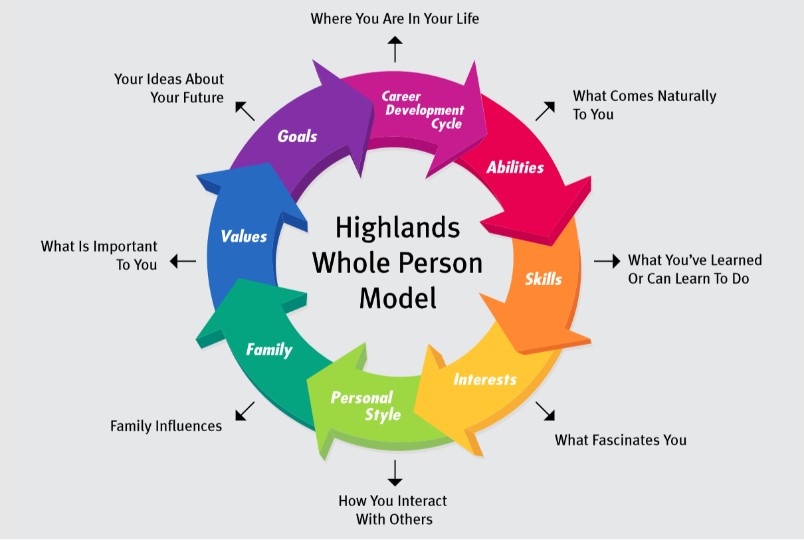
Creating a Personal Vision Statement requires careful thought and reflection in exploring each of the 8 essential factors of the Whole Person Model.
Your Highlands Certified Consultant will guide you to create your Personal Vision of your ultimate goals and how to take practical steps to identify and pursue the career that best aligns with that vision in the Personal Vision Coaching Program. Discover the Highlands proprietary Whole Person Method -
Consult Your Highlands Affiliate
Your Highlands Affiliate is an active partner in your career exploration. The more effort you put in, the
more your Affiliate can help. Your Affiliate will help you understand the benefits of making the following
shifts in how you approach your results, and how you can make educational and career choices now
and in the future:
Move from thinking
Move to thinking


There is an answer or formula that an expert
can provide to tell me what I should be or do

By understanding myself in terms of my abilities and
other factors, I can choose and explore multiple
options to determine the best fit
There is one “right”, “best” or “ideal” ability profile
It is important that I understand my profile and how to best use my strengths
There is a perfect job/career
There is a job or career path that may fit me now and as I grow in my career
There is only one way to do a job
What is my best way of accomplishing specific job responsibilities
Jobs don’t change
Because jobs and careers can change, I need to be aware of how my strengths fit and what, if any, skills I need to build
Personal circumstances don’t change
Because personal circumstances can and do change I need to be aware of my personal style and abilities to learn to adapt to changing circumstances
The right job will just show up
I need to take action and explore options
Explore Your Interests
Abilities and interests go hand in hand. Abilities provide the potential for doing things well and
interests provide the motivation and energy to use those abilities. Most of the time, a strong ability will
assert itself and you will use it in a variety of ways without ever thinking about it. Sometimes, however,
a strong ability may remain dormant due to lack of interest in applying it or lack of experience in using
it. Conversely, a strong interest can provide the motivation to develop a particular skill even if your
aptitude is low or moderate.
Take playing basketball as an example. Those who have a natural ability to play, and an interest in
doing so, may play the game well with little effort. Those who have the natural talent and have never
tried playing may not know their capability, while others with this natural talent may have no interest
in playing. Either way, their natural talent for playing basketball will not be demonstrated. There is also
a group of people who become very good basketball players through practice, practice, practice even
though their natural talent is low to moderate.
If you’ve never explored your interests or if you are curious about the alignment of your abilities with
your interests, you can begin by going to the free Interest Inventory published by the US Department
of Labor on the O*Net website at
http://www.mynextmove.org/explore/ip. The O*NET is the nation’s
primary source of occupational information. You can also work with your Highlands Affiliate who may
have additional inventories and activities to explore your interests.
Seek Out Experiences
Building self-awareness is key to your success. Success in college, success in the world and how much
you enjoy your life will be determined by how well you know yourself. Knowledge about your natural
abilities is at the foundation. Knowledge about other internal factors is key.
Awareness of how each factor works for you and how all factors work together will only come from
seeing them in action. That’s why proactively seeking out experience is critical.
You may consider volunteer work, clubs, committees, work-study programs, co-op programs, job
shadowing, informational interviewing/surveying, part-time jobs, community service, and non-credit
classes. You can tinker with computers, machines, equipment, instruments, artistic mediums, and
other hands-on materials. You can run for office in a club, try your hand at public speaking or perform in
a school or community play. Whatever experiences you have will help you expand or refine your career
exploration.
Use the knowledge that you have gained to intentionally select experiences for the insights they will
provide, to change what you notice as you explore and to refine how you articulate your experiences.
Your Highlands Affiliate can help you be proactive in your choices. Work with your affiliate to identify
options to explore based on your unique self. You can feel confident about the talents identified by the
HAB. You are equipped with a language to connect what you know about yourself to the world of work.
Now it’s up to you to use it!
“Some people use their talents: others ignore them. Our philosophy is this:
TAP INTO YOUR TALENTS – DON’T WASTE THEM, they are your hard-wired key to personal and
professional success” (McDonald et. al., DWYT)
CREDITS
The Highlands Career Exploration Supplement (HCES) is copyrighted by The Highlands Company 2014, all rights reserved.
Material for this report comes from the knowledge and experience of all Highlands Affiliates. Developed for this report by
primary author Dori Stiles, PhD with significant contributions by co-authors Tami Peterson, Leslie Martin and Robert Wall.
HCES team members include Andrew Neiner, PhD – statistician and Natalie Pepper – editing.
Terms and Conditions of Use for the Highlands Ability Battery (HAB)
The Highlands Ability Battery (HAB) is not normed for use by employers to predict performance or success in a job, or screen applicants for hire or selection purposes. The HAB is to be used exclusively by Highlands’ consultants who have been trained and certified in the administration of the HAB and the interpretation of the Highlands report publications to equip individuals with knowledge of their aptitudes for making occupational and educational choices.
.png)



 For Career Explorers


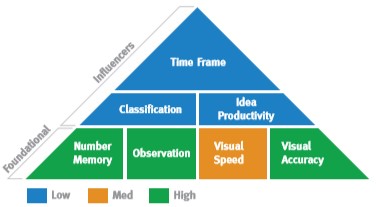
 Ability Patterns - Connections to Abilities
 Very Clear Connection to Abilities

